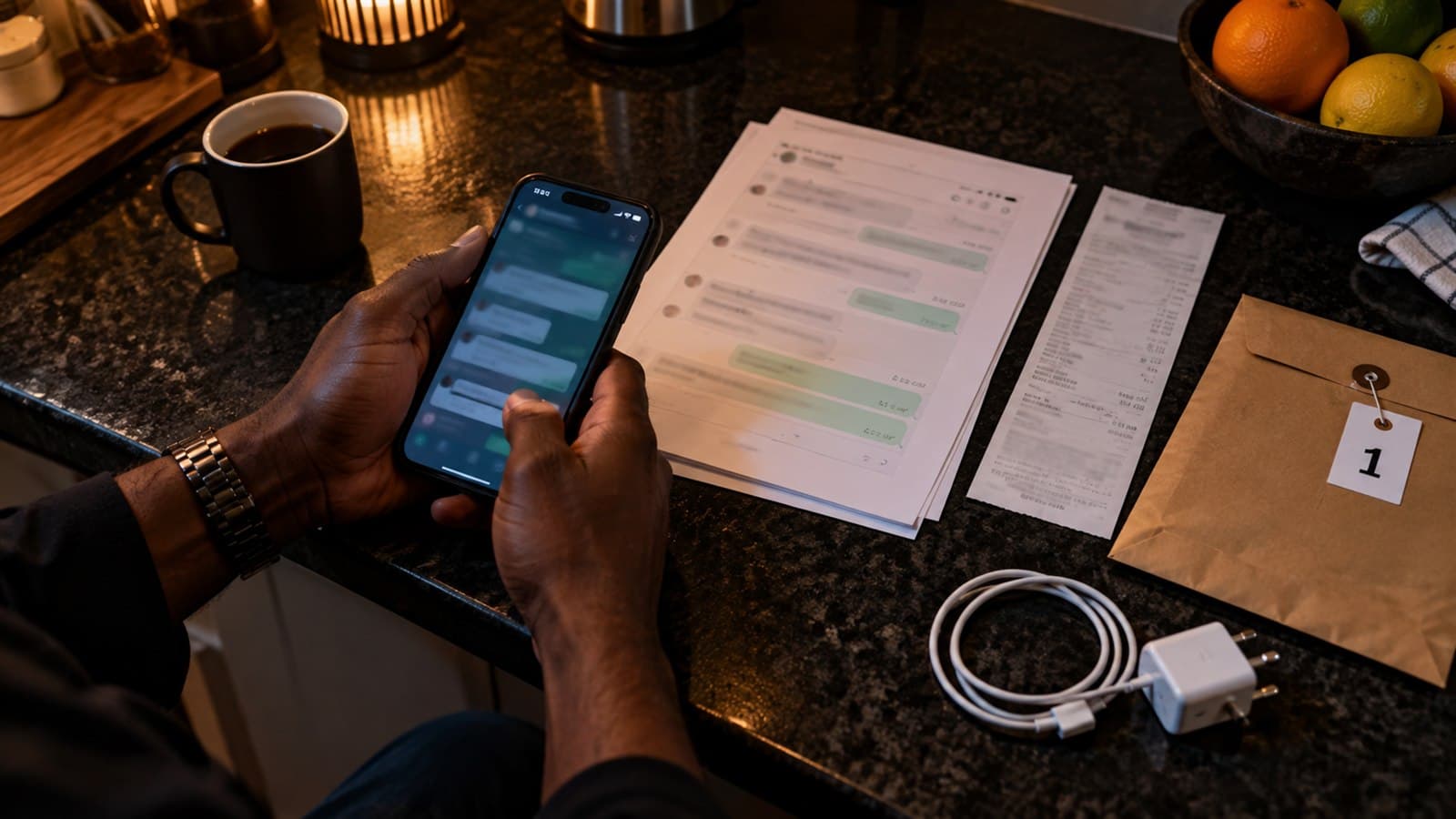
A member says she paid her contribution in March. The treasurer says the payment never arrived. She has a screenshot of a banking notification. He has a screenshot of a message where she promised to "sort it out next week".
Both are pieces of digital evidence. Neither, on its own, settles the question.
Our article on recording WhatsApp votes covers how to make valid decisions in a group chat. This article covers a different problem: what to do with messages once a dispute has started, so that they are still credible if the matter reaches mediation or court.
Electronic Messages Can Be Evidence
The Electronic Communications and Transactions Act 25 of 2002 (ECTA) provides that information is not denied legal effect, or excluded as evidence, merely because it is in electronic form. WhatsApp messages, emails, SMS notifications and app-based polls are all forms of "data message".
That is the starting point, not the finish line. ECTA directs the court to assess the evidential weight of a data message by considering, among other things:
- how reliably the message was generated, stored or communicated;
- how the integrity of the information was maintained; and
- how its originator was identified.
In plain terms: the court asks whether it can trust that this message was really sent by this person, at this time, and has not been changed since.
Why A Bare Screenshot Is Weak
A screenshot is a picture of part of a screen. It can be:
- cropped to remove context, such as the reply that came next;
- taken from a chat where the contact name was edited to look like someone else;
- assembled from messages sent at different times; or
- altered with ordinary photo-editing tools.
Courts know this. A screenshot is not useless, but if the other side disputes it, you will need more to show it is genuine.
How To Preserve A Chat Properly
As soon as a dispute looks likely, take these steps.
1. Keep The Original Device And Chat
Do not delete messages, leave the group or reset the phone. The original chat on the original device is the best proof that a copy is accurate. If you replace your phone, make sure the chat backup is restored and keep the old device.
2. Export The Full Conversation
WhatsApp's Export chat function creates a text file of the conversation with dates, times and sender names, and can include attached media. An export shows the surrounding messages, which helps the court understand context.
Store the exported file somewhere safe and unaltered, such as a scheme email account or secure folder. Keep a second copy.
3. Record Who Did What, And When
Write a short note recording:
- whose phone the chat came from;
- the phone number linked to each relevant contact;
- the date and time the export or screenshot was made; and
- who has had access to the files since.
This is a simple version of what lawyers call a chain of custody. It helps you explain later why the copy can be trusted.
4. Back Up Payment Evidence From The Source
A forwarded banking notification is weaker than a statement downloaded directly from the bank. Wherever money is involved, obtain:
- the bank statement showing the transaction, or its absence;
- the bank's proof of payment for an outgoing transfer; and
- the scheme's contribution register and reconciliation for the period.
Bank records, kept in the ordinary course of the bank's business, are usually more persuasive than a message about a payment.
Polls, Voice Notes And Deleted Messages
Polls: a WhatsApp poll shows who voted for which option, but it may not show whether the vote met the constitution's notice, quorum and threshold rules. Pair the poll with the minutes or resolution that recorded the outcome.
Voice notes: export them with the chat or save the audio file. If a voice note is important, prepare a written transcript, but keep the original audio available.
Deleted messages: "This message was deleted" proves only that something was removed. If someone else in the group saved or quoted the message before deletion, that copy may help.
Presenting Messages In A Dispute
Whether the matter is an internal hearing, mediation or court, organise your evidence so someone unfamiliar with the scheme can follow it:
- A one-page timeline of the key events, with dates.
- Numbered copies of each relevant message or document, in date order.
- The source of each item: exported chat, bank statement, signed minutes.
- The original device available if the authenticity of a message is challenged.
Highlight the relevant message, but include enough surrounding messages to show context. Selective quotes tend to undermine your credibility.
In The Small Claims Court
The Small Claims Court is designed for people to present their own cases without legal representatives at the hearing. Only a natural person may bring a claim there, so a member can use it for a claim that is personally theirs, such as a disputed refund of their own contributions. A stokvel, club or other association cannot be the claimant; recovering the scheme's money needs a different court. Before a claim is issued, the claimant must generally send the other party a letter of demand and allow time to pay. Check eligibility and the current monetary limit on the Department of Justice's Small Claims Court page. Our dispute-resolution guide explains when to escalate.
Bring printed copies for the commissioner and the other party, and bring the phone.
Respect Other Members' Privacy
A group chat contains other people's phone numbers, family news and financial details that have nothing to do with the dispute. When preparing copies:
- include only the messages relevant to the issue;
- redact unrelated phone numbers and personal details where you can; and
- keep the unaltered original safely, in case the court needs to see it.
Do not forward the dispute file to the whole group. POPIA requires reasonable safeguards for personal information, and the Information Regulator publishes guidance on handling it.
Better Records Mean Fewer Disputes
The strongest evidence is usually created before anyone disagrees: a contribution register reconciled monthly, payment references matched to members, decisions recorded in minutes and approvals kept with each payout.
Zeturi keeps contributions, approvals and decisions in one scheme record with dates and the person responsible, so a disagreement can often be settled by checking the record rather than scrolling through a year of messages.
Authoritative References
- Electronic Communications and Transactions Act 25 of 2002
- Department of Justice: Small Claims Courts
- Information Regulator: POPIA
- Legal Practice Council: Find a legal practitioner
This article provides general information about evidence and record-keeping, not legal advice. How a court treats a particular message depends on the facts and the forum.